Album Recording Credits:
• All songs performed by: Engrupid Pipol
• All songs written by: Engrupid Pipol
• Produced by: Engrupid Pipol
• Mixed by: Hitbox Estudio
• Mastered by: Hitbox Estudio
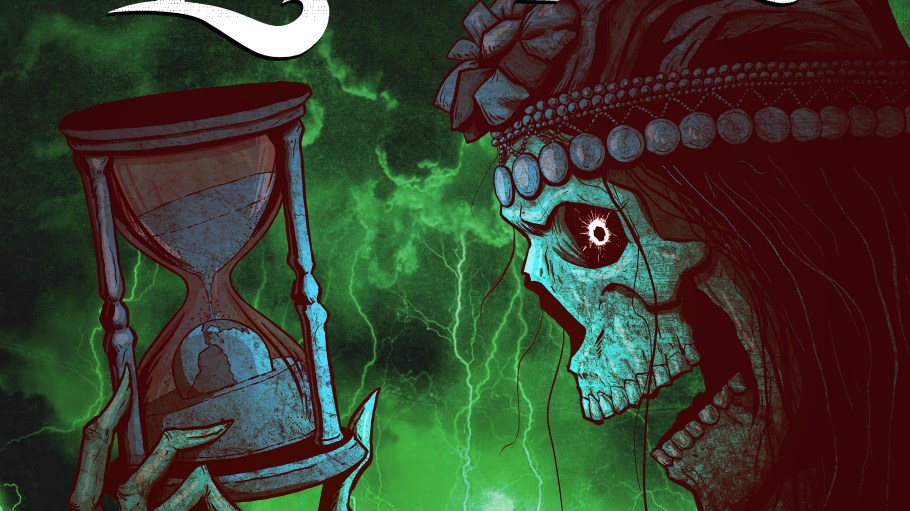
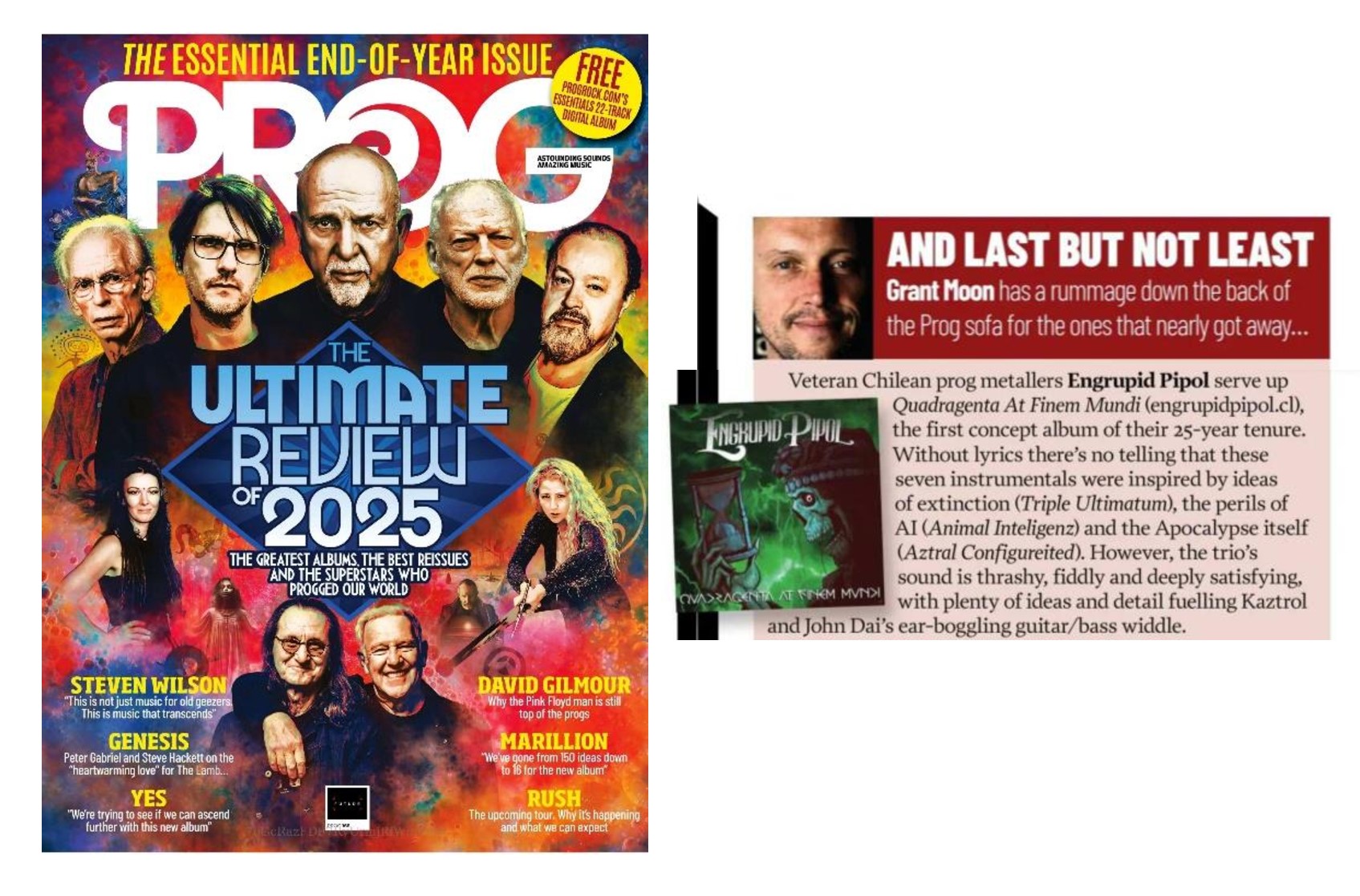
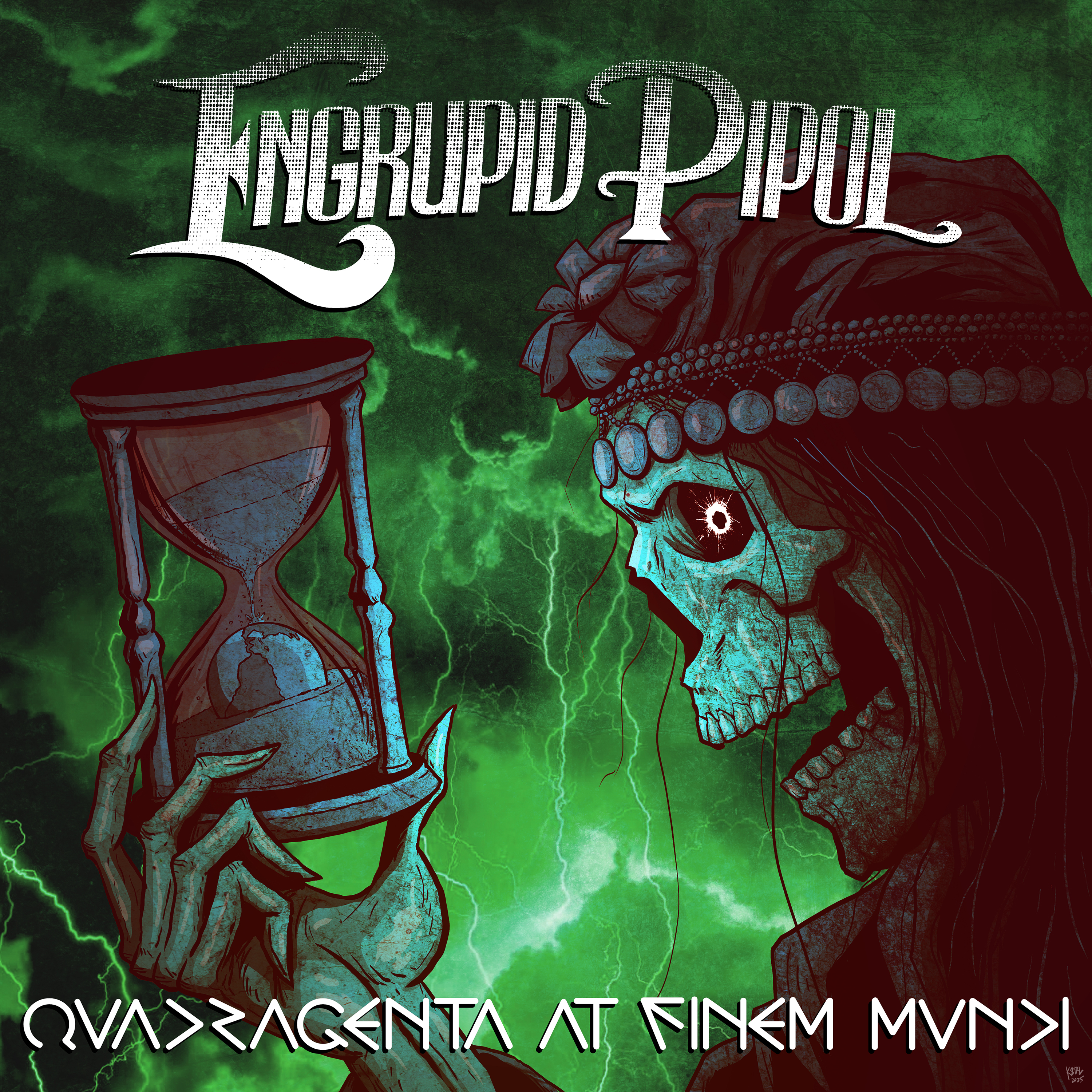
• Album Artwork by: KaztrolBand Line Up:
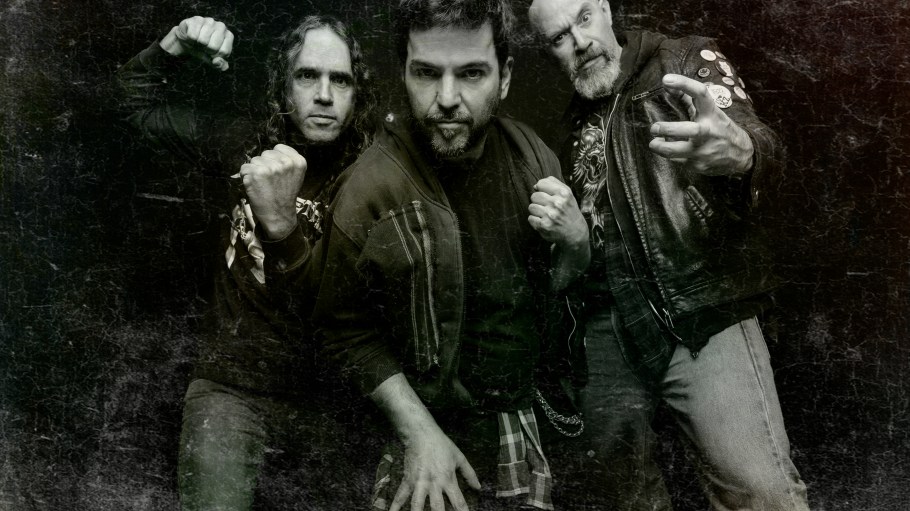
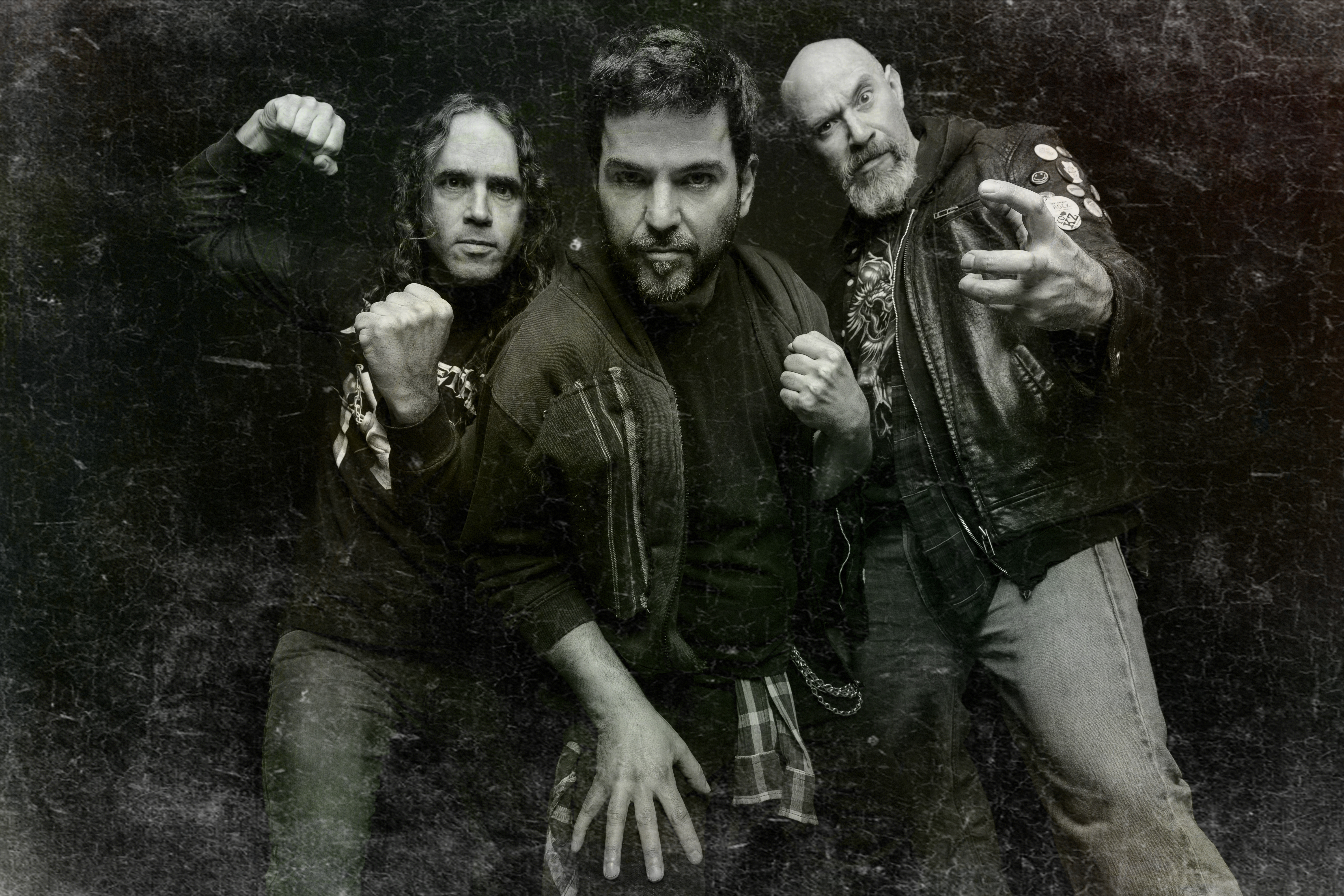
Kaztrol, Guitar
John Dai, Bass
Nacho García, Drums
======================================================
About The Album Artwork:
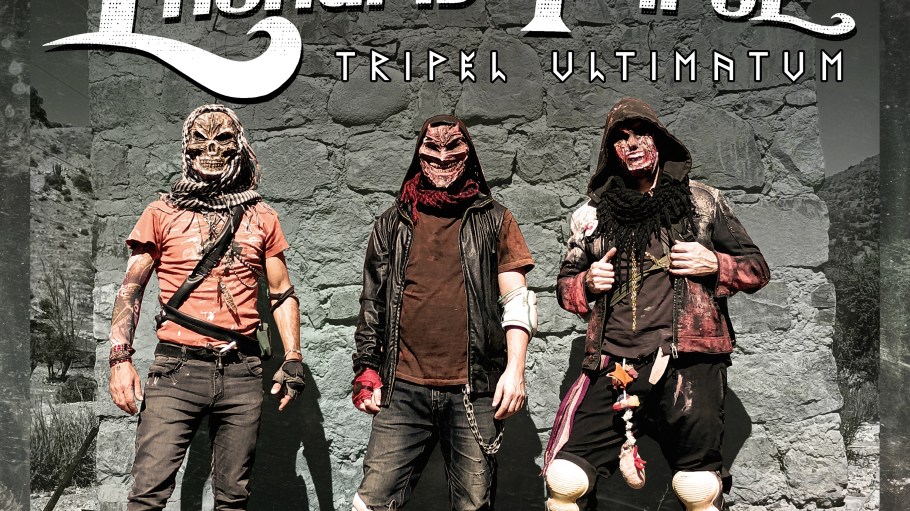
The artwork for the album tries to reflect the concept of the album and its prophetic nature. The end of the world is coming, and no one can stop it. You can see us as a kind of messengers or the three horsemen of the apocalypse.
About the album as a whole (LYRICALLY & MUSICALLY):
Nacho: “Quadragenta at finem mundi” is the band’s first conceptual album. It consists of seven acts, seven tracks of instrumental prog-metal. They metaphorically recount the current context of our civilization and its near future. A dark and gloomy look in which civilization condemns itself and leads us to the extinction not only of human beings but all life on earth. The album addresses topics such as thermonuclear wars, the use of AI in everyday life, the ambition for power, narcissistic vanity, and the use of technologies and methods of control that are beyond human control, anticipating the end of times. Each act presents a symptom, a warning announced by the prophets, of the coming of the end of times.
Track by Track (LYRICALLY & MUSICALLY):
Act I “Triple Ultimatum” (Triple Ultimatum)
Kaztrol: This was one of the last songs to be composed. I wanted to write a song that wasn’t too long, with a heavy, groovy riff and no acoustic parts, something that I felt was missing to complement the rest of the album, which is more prog. It’s a banger to kick off the album, full of adrenaline and melodies that I hope will easily stick in your head, especially when you’re driving at high speed.
John: It tells the story of three survivors of a nuclear disaster, wandering musicians in a desolate world on the brink of extinction.
ACT II “Voragine” (Vortex/ Vertigo)
John: The name of the song came about to explain the writing process. Ideas came to me so abruptly and intensely that it was like being inside a whirlwind or a vortex of ideas and images that filled my head and prevented me from stopping playing the guitar. I spent hours like that, playing and developing thousands of variations of these riffs. Everything was chaotic, as ideas kept coming and I couldn’t find any order, any beginning or end. That’s when I got together with Kaztrol and Nacho, and I played these one by one, and we reached a consensus on which ones we liked best. That’s how the structure of Vorágine was born, all played on an acoustic guitar, which is where all my compositions are born. That’s why there’s this impetuous whirlwind, this unbridled passion, the intensity, confusion, and things in motion, transforming everything in its path. The vertigo of speed is a leap into the void, a leap of faith.
Kaz: The song deals with the maelstrom that the world is experiencing. We are caught up in the whirlwind of consumer society, planned obsolescence, and an excessive capacity to devour the world and its resources, like a parasite devouring its prey until it kills it.
ACT III “Animal Inteligenz” (Animal Intelligence)
John: Animal Inteligencz is a reference, a slightly sarcastic one, to the emergence of Artificial Intelligence in our lives. Because of its acronym, A.I., I decided to rethink animal intelligence, and ultimately human intelligence, since we are just another animal on earth, with all that it implies. Everything we have achieved, and how we can also destroy it all at the touch of a button. So it’s a bit of a wake-up call about how absorbed we are as a society in this new fetish that is A.I. and how we look at it as if it were a new God. And we don’t know if it’s a good or bad God, if it will be benevolent or sadistic towards us. It’s a bit like the fear of the unknown.
In this case, I already had some ideas, but they were all very basic, a vague idea of the theme. I had some ideas about the structure, but it needed a lot of work. I presented the riffs to the guys, and we worked on and polished the song. Engrupid Pipol’s composition work, in some cases, is quite artisanal, like a goldsmith polishing his work, his jewel. Then comes a more technical part, where we set the click and its variations, and we adjust in terms of the intensity and nuances we want to highlight. We also discuss the length of the song, the relevance of certain parts, and we edit as we play the song more and more.
Nacho: What comes to mind on this topic is a near future where we use AI and robotics for reasoning, manual and industrial activities, creation, and imagination. iIt will become commonplace and prevalent across most of the planet. Humans have ceased to think, their brains have degraded to the point that several animals are now more intelligent than humans, leaving the world in the hands of AI and other mammals that are beginning to evolve, attempting to occupy their former place.
ACT IV “Inspireichon Burn” (Inspiration Burn)
Nacho: The song tells the story of the apocalypse caused by thermonuclear war and how the ambition for power and control leads to the self-destruction of a large part of human life by an elite group of war merchants, whose greed leads them to want to see the world burn.
I remember riding my bike to Kaztrol’s house for a theoretical rehearsal, which is what we call our writing and editing sessions, a kind of rehearsal without drums, when the main riff popped into my head and started echoing in my brain with this fast drumming and the stack shifting. I had recently heard some brutal death metal songs and wanted to compose a destructive song. Obviously, my brain could create and hear several riff ideas that came later, but they were impossible for me to play on the guitar. When I got off my bike, I went into Kaztrol’s house and started singing to him all the riffs that had come to me on the way, one by one, and others that came to me as I listened to the song taking shape. After a few hours of work, we already had the basics of the song.
John: The song was composed by Nacho, but it had rhythmic drum structures, and it was Kaz who put the notes together on the guitar. All this under my attentive and sometimes distracted gaze, and my interruptions like, “Let’s smoke, shall we light something up, burn for inspiration?”
ACT V “Vairal Madnez” (Viral madness)
John: The theme is inspired by the phenomena of content “going viral” on social media, fake news, deepfake technology, cryptocurrency scams, and fraudulent influencers as the new false prophets. On the other hand, as its name suggests, it also refers to virality, viruses and their epidemic spread, and the danger of manufacturing viruses for military purposes and biological warfare.
Nacho: It’s a double wake-up call: on the one hand, it shows us the human madness of creating a digital image of oneself to share on social media and seek approval, completely disconnecting from the real world to “live” in the virtual world; on the other hand, it warns us about the use of viruses and pandemics as a method of control through digital health passports, biometric controls, video surveillance cameras, and deprivation of rights.
Kaz: This is the only song we all share writing credits. It has equal riffs by the three of us and was probably the hardest song to find its final form. We had to work a lot on this when, but I love the results and it’s one of my favorite songs to play.
ACT VI “Aztral Configureited” (Astral configuration)
Nacho: This was the last song we put together as a band. We needed a new song to complete the tracks we needed for our LP, and the studio session date was fast approaching. I arrived at my apartment feeling motivated, dusted off my acoustic guitar with its rusty strings, and started playing around a bit. I’m not a good guitarist, but I have good rhythm and find it intuitive to play riffs with two or three fingers on the lower strings of the guitar. So for a couple of weeks, I would come home and start playing around until ideas began to repeat themselves and new riffs were born from variations of these ideas. I had melodies that sounded in my head and sang to Kaztrol to play as the melody in the intro. The song was practically finished structurally. Of course, the guys then worked their magic.
Kaz: This track recounts the combination of themes related to the previous songs. The configuration of the stars announces the end, the final apocalypse. I imagine a beautiful view of space as planets align while all life on Earth ceases to exist. Well, almost all life.. All ends bring a new beginning, and a new cycle is born.
ACT VII “Ameba Emenens” (Ameba Eminence)
Kaz: This was the last addition we made. I wanted to add a new color to the album with this completely acoustic song. It serves to relax the ear and rest after the avalanche of riffs that came before.
It’s a song loaded with sentimentality for me because I was all alone (my bandmates who were on vacation) and was going through a bad time emotionally. I was able to vent through the guitar as this song creatively took form.
Conceptually, after the apocalypse has happened and humans have managed to destroy all life on the planet, only desolation remains. However, one last, solitary ameba remains alive, which will manage to start life again, beginning a new cycle.
Nacho: As a completely acoustic track, this final act takes us on an introspective journey, adding new textures and soundscapes to the album. It’s a beautiful way of closing the album and ending it on a more hopeful note.
===================================================
Fun Facts – Story Angles:
1- Although our music may seem very serious, there is no lack of humor in the band, and most of the song titles use a kind of deliberately misspelled Spanglish. The best example is the name of the band, Engrupid Pipol ( pronounced engrupid people). Engrupid comes from the Spanish verb “engrupir,” which can mean to deceive or to charm. In our case, we charm ourselves and the power of our music. If you’re an “engrupid“ person, you have the absolute conviction to believe in yourself to fight for your dreams and your art, no matter what anybody says or thinks.
2-All the artwork of Engrupid Pipol’s albums is done by Kaztrol, who studied art for a year, graphic design for a semester, and finally made his way into studying comics and animation. His thesis was the first music video for the band SíFiLiS, “Rocky Cerveza,” about the journey of a man who falls into alcohol, drugs, and progressive metal, and his transformation into a party-loving vigilante. The music video is fully traditionally animated, created entirely by Kaztrol, who sacrificed countless nights and parties to complete a titanic project.
3- John Dai and Kaztrol were neighbors and childhood friends in the 90s. Some years later, Kaztrol met Nacho through John Dai for Nacho’s 17th birthday celebration. On that occasion, Kaztrol (accidentally) destroyed a gate at the entrance fence and a window in the living room of the birthday boy’s house. The two became friends instantly.
4-In Chile, when the band started playing, there were almost no venues for metal shows, and the shows were held in illegal locations, and the police would arrive quickly. This is how the band’s policy of always opening shows was born, so as not to be left without a gig.
5- “Quaragenta At Finem Mundi” is an album whose recording and distribution is possible thanks to the Music Fund of the Chilean Ministry of Arts, Culture, and Heritage, a fund awarded in February 2025.
 ashermediarelations.com